Showing posts with label movies. Show all posts

Thursday, June 20, 2013

The Pleasures of Man of Steel and Inferno

This week I shed my elitist philosopher persona and drank deeply from the well of popular culture.  I bribed my kids to do some work for me around the house by taking them to the new Superman film.  And for Father's Day they got me the new Dan Brown thriller, Inferno, which I read through in a few sittings.  The philosopher in me looks to books and films primarily for profundity, complexity, and subtlety.  And perhaps the best way to measure my estimation of these qualities in such media is how many times I re-read or re-watch them.  I have no plans to re-read Inferno or re-watch Man of Steel.

That's not to say that I didn't enjoy them at some level.  I also enjoy at some level sitting on the couch and eating an entire bag of potato chips while I watch those shows about aliens having visited earth (yes, we signed up for cable again).  But after such experiences I can't help wondering whether there are better pleasures to be had than these.  That's a tough argument to make, but one that has some plausibility to it.  We'll come back to that point.

Both of these stories brought up the theory of utilitarianism.  Should Superman ally with his fellow Kryptonians and take over Earth to repopulate their species?  Yes, it would hurt a bunch of humans, but if it resulted in more good (= life) for the most Kryptonians possible, then wouldn't it be worth the cost to humans?  Wouldn't we feel little pang of conscience to sacrifice a bunch of lower life forms to save our species?  Or switching to Inferno, Dan Brown's conspiracy du jour is that it has been mathematically demonstrated that the current overpopulation of the earth will lead to the extinction of human beings within 100 years if we don't do something drastic.  So utilitarianism would suggest that eliminating 1/3 of humans now is justifiable if it saves more people than that in the future.  This is the straightforward "moral" reasoning of Jack Bauer, et. al. in 24: if torturing a guy's kids gets him to tell us where the bomb is in the shopping mall, then shouldn't we do that so it will save lives?

Unfortunately the calculus of utilitarianism is never quite so simple.  Early on, J.S. Mill realized that we can't just calculate how much good or pleasure some action brings about, because it seems like there are different kinds of pleasures.  And he advocated that some of these pleasures are better than others.  And since was an elitist philosopher guy, the best pleasures ended up being those profound, complex, and subtle experiences that can be appreciated such folks.  So the pleasure of a listening to a Beethoven symphony is better than the pleasure of watching two super heroes duke it out for the last hour of that movie.  Or so the argument went.

I have to say I'm sympathetic to this argument at some level.  There was an experiment with mice in which they hooked up some electrodes to the pleasure center of their brains and the mice could learn to active this by pressing a button in their cage.  Once they learned how to do it, they sat there and pressed the button repeatedly until they died (because they didn't stop to eat or drink or sleep).  Is that kind of pleasure good?  Aren't there better kinds?

Reading Dan Brown is kind of fun.  The three page chapters pull you along through the plot at a break-neck speed.  You want to find out where the bag of plague virus is hidden, and you want to find out who is the double-crosser, etc.  There's not much work to reading it.  And I suppose you get out of it what you put into it.  Whenever I've put in the effort to read something harder, though, I find that much more rewarding in the end.  Not everyone has the taste for Anna Karenina, but profundity, complexity, and subtlety are found in much more abundance there.  The same is true for gruyere cheese compared to the nacho cheese dip at the 7-eleven, and for chess matches compared to the NBA, and for reading good blogs compared to watching YouTube.  Should we elitist snob types try to force the good stuff on everyone, or even make the claim that one really is better than the other?

I don't know.  I'm in the mood for a bag of chips.

Thursday, January 3, 2013

Happy Birthday J.R.R. Tolkein!

On this day in 1892, John Ronald Reuel Tolkein was born in South Africa.  That means that ten years ago today would have been his eleventy-first birthday!  That's one of my favorite neo-logisms to come from his books (along with "second breakfast").

I almost didn't want to go see the current cinematic version of The Hobbit.  I was a pretty big fan of the Lord of the Rings movies, thinking they got the epic scope of the story just right as well as the intimacy of the characters.  And the visuals were fantastic.  But of course the movie makers succumbed to Hollywoodization in several places that left me scratching my head.  And that is what concerned me about what they might do to The Hobbit.

I've read the book three times--first during my college years; then I read it aloud to my class of 7th and 8th graders in Africa in the fall of 1991; then my good wife and I read it to each other in 2001 before the trilogy movies started coming out.  The Hobbit is very different in feel from the trilogy.  I'm afraid the movie doesn't feel any different.  Of course the visuals are still very cool (we saw the 3D version)--especially the beginning with the back story of the Dwarf kingdom under the mountain.  But it feels to me like Peter Jackson et al. said, "Hey, our LOTR trilogy was fantastically successful, so let's apply the same formula and do it again."  There is too much fighting and not enough singing (though the new rendition of "That's What Bilbo Baggins Hates" was pretty good).  Look at the movie poster.  Is that really what the book connotes?

I thought Martin Freeman made a pretty good Bilbo.  I really like Freeman as Dr. Watson in the British Sherlock series.  It is interesting that he is very much the same character there as he is with Bilbo.  I guess most actors tend bring their acting baggage with them into new roles (with the notable exception of Matt Damon).

I'm sure I'll see the other movies.  Just like I'm sure I'll go see the Ender's Game and Silence movies when they're made.  But I have a reputation to keep up as an elitist snob who thinks books are better than movies.  So I'll go ahead and reveal to you right now that those books are better than their movies too!


Wednesday, October 24, 2012

Courageous and the Atonement

I graded a stack of papers recently for my history of Christian thought class.  A couple of these were about the atonement, and both mentioned a scene from the movie Courageous.  I've not seen the movie, and don't really have much of a desire to.  I grew up in the 80s when Christian music was trying to come into its own.  I listened to a lot of it, mostly because my music choices were significantly restricted by my parents.  I don't really resent this, any more than I resent having grown up in the places I did.  It was who I was and I'm sure it has contributed to who I am now.  But a couple of weeks ago one of the kids pulled out an old cassette deck from a storage place and we played some of my old Christian rock tapes from the 80s.  There was certainly a lot of nostalgia, but they really weren't that good.  The music was uninteresting and the lyrics were cheesy and preachy.  That's a sweeping generalization for which exceptions could be found, but I'll stand by it on the whole.

The point of that long digression into some of the silliness of my youth is to say that it seems to me that the Christian movies of today (of the Kirk Cameron genre) are in the same developmental phase as Christian music was in the 80s: cheesy and preachy.  I think there is a legitimate place for preaching and cheese, but I'm not sure if it should qualify as good art.  So, I generally don't watch those movies.  (I'd be happy to be pointed to the exceptions in that regard if any of you have some.)

Anyway, evidently there is a scene in Courageous when one of the characters compares God to a judge and says something like, "If someone were murdered and the judge let the murderer off the hook and didn't punish that crime, would you think that was a good judge?  No.  Of course not.  So would God be good if he didn't punish sin?  No. Of course not."  This is supposed to be an argument on behalf of the penal substitution theory of the atonement, I guess.  But I'm not very persuaded by it.  In the analogy, the crime wasn't committed against the judge, and so the judge is supposed to be an impartial protector of the law.  Is that really what they think God is?  If a crime was committed against me, and the offender was apologetic and offered to pay reparations, would I be considered a bad person if I said, "No, that's OK.  I forgive you.  Don't worry about it."??  Isn't sin committed against God, and so couldn't God forgive people without being called a bad judge??  Is it really forgiveness if God demands payment??  That sounds more like God is being paid off.

Christians of our generation have been pretty overwhelmingly persuaded by the narrative of penal substitution.  It seems to me that we need to think more carefully about the implications of such a position.  There's a lot of ink being spilled on theories of the atonement now, and some people are pretty sure that adopting the right theory is a necessary component of being saved.  God help us.  God help us all to think hard and long about matters of truth, and to be generous enough to admit that we might be wrong.

Monday, February 13, 2012

Still Disappointed with Episode One

The Stump family went out Sunday afternoon to contribute to George Lucas's latest moneymaking venture by seeing the theater release of Star Wars Episode I: The Phantom Menace in 3-D.  The cultural mythology of Star Wars has had a significant place in my imagination over the years.  I remember the first time I saw the original Star Wars (episode 4), my youth group had gone to Fort Wayne and the bus broke down.  So we went over to someone's house and they had the movie on what was then the latest and greatest AV device: the laser disk.  I was hooked from the scene where Luke stood staring into the setting suns (a jigsaw puzzle of which can be seen hanging on my office wall).

Science Fiction has always fascinated me with the ability it has to reflect on our own situation by imagining very different worlds.  In this regard, I think Episodes 4 and 5 are some of the greatest science fiction films of all time.

So it was with great anticipation that I waited for Episode 1 to come out back in 1999.  And of course like everyone else, I was impressed with the technological wizardry of the images on the screen.  And while there are some thematic elements that have promise in the film (like the largely unexplored nature of the symbiotic relationship of intelligent species on Naboo), in the details of the script it is disappointing.  Unfortunately the 3-D version didn't help this!

Undoubtedly in the name of forging family memories, I'll try to convince my wife and kids to accompany me to Episodes 2 and 3 when they come out in 3-D over the next couple of years.  But I'm seriously looking forward to the outings in 2015 and 2016 when A New Hope and The Empire Strikes Back hit the big screen in 3-D.  In the meantime, I'll have to content myself with watching episodes on Netflix of what is surely the most profound television series in the last decade:  Battlestar Galactica.

Friday, August 12, 2011

Help and Complicity

For the second Friday in a row, I purchased matinee tickets at the local cineplex and saw a movie on the big screen.  This time it was a daytime date with my wife to see The Help, a film adaptation of a novel she had just finished reading.  I haven't read the book, but I trust my wife's assessment that it was one of the better film adaptations.  The theater was surprisingly full for an afternoon showing of a movie without comic book heroes in it.  The under 50 set was vastly outnumbered by the over 50s, and carriers of the y-chromosome totaled only in the single digits.  Perhaps this latter demographic is explained by the previews, which make it seem like a chick flick.  And while there are no male characters of any substance, it definitely was not a chick flick.  It was a story of humanity in all our glory, shame, strength, and weakness.  If Viola Davis doesn't get nominated for an Academy Award, then there is something seriously wrong with the system.

The story is set in Mississippi in the 60s when all the white people had black maids to cook, clean, and raise their children.  It was so uncomfortable for me to watch this kind of society being displayed.  My first reaction was to be thankful that I live in the north in this decade, and so am not guilty of such blatant racism.  But then, I suspect the guilt goes deeper and is more complicated than that.  Last month it was announced that the median white household in American is worth twenty times more than the median black household (it was only seven times more in 1995).  Am I personally to blame for this?  I hope not.  Am I complicit?  That's tougher to answer.

There were two African-American women sitting next to me at the theater, and I kept wondering what I could say to them after the movie that wouldn't sound condescending or patronizing or otherwise white.  I wasn't coming up with much, but then was let off the hook since they got up and left very quickly at the end.  I suppose it is progress that we were sitting next to each other in the same theater, but I can't help wondering what their take would have been on all the white people in the theater reacting so positively to this Hollywoodization of the civil rights movement.  Has there been progress from their perspective?  What are the blind spots that we majority culture people have?

When we lived in Sierra Leone for a year, we shared an African maid with another teacher.  She walked up the hill to our compound six days per week to do all our cleaning and cooked lunch for us.  She got paid about $8 per month, plus a bag of rice.  It was the mission's policy not to pay the hired help more than those who worked in governmental jobs (like teachers), otherwise there was no incentive for them to pursue an education.  Instead they'd attach themselves to the white foreigners to cook or clean or be a night watchman.  We with our meager missionary salaries were kings and queens living in a land of poverty and despair.  I couldn't stand that part of our year there.  Based on that experience, I don't think it works for missionaries to come into a foreign land and maintain a radically different standard of living while ostensibly calling the natives to adopt our religion.  (Of course if I had paid better attention to Things Fall Apart in my high school literature class, I would have known as much already.  More recently, The Poisonwood Bible and The Purple Hibiscus should be required reading for all missionaries to Africa.)

Now I live on a nice comfortable street, where probably all of us are above the median household worth.  There is even an African American family who lives on my street.  We're not segregated any more are we?  My kids go to the big suburban school where most of the kids are white, but it's not like they have separate water fountains.  And certainly minorities aren't prohibited from attending there, right?  All they'd have to do is be able to afford property in neighborhoods like mine... which I guess according to the median household worth numbers isn't going to be any time soon.  Help!

Friday, August 5, 2011

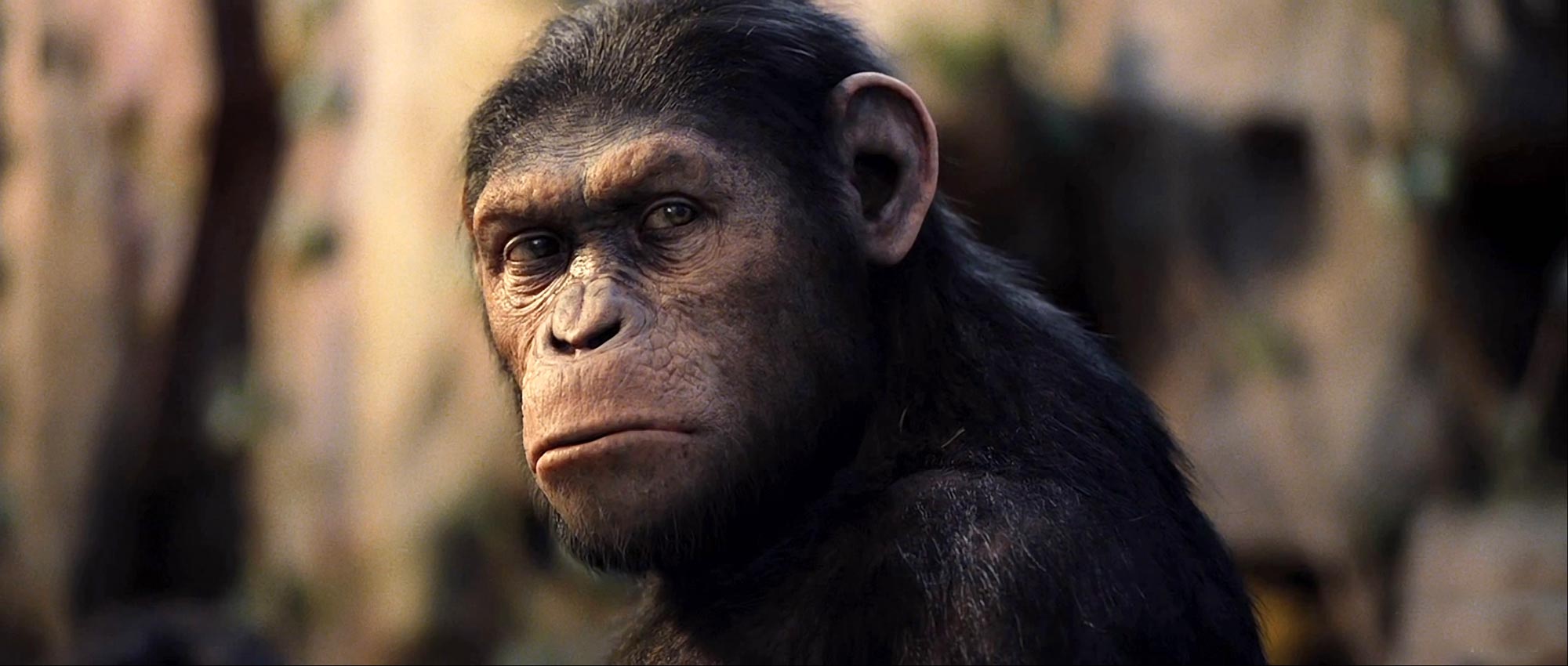
Planet of the Apes

One of my favorite movies of all time (let's say top 20 at least) is the original Planet of the Apes.  It gave an interesting (if mostly one-sided) treatment of science and religion at a time when not many were talking about those two together.  And the macro-plot was so fascinating.  So when I heard that a prequel was coming out, I put opening day on the calendar.  And this afternoon, I took my boys to go see it.

I'll confess that I was a bit nervous about it.  The sequels to the original became more than a little goofy, as only the 70s could be goofy, and the remake by Tim Burton was visually nice but the story line was emasculated.  But I figured that if nothing else, it would be good for a few laughs.  We didn't laugh much.  This movie was frightening--frighteningly awesome, as my kids would say.

Rise of the Planet of the Apes is easily my favorite movie of the year--though admittedly, that isn't saying much.  But even if I had gone to see a bunch, I'm pretty sure this would still be my favorite.  Don't worry about spoiler alerts, because you know what's going to happen: the apes win.  And even just a little way into the movie, you know how they are going to win: there is a virus developed that causes brains to build a bunch of new synaptic connections and increase intelligence, but humans can't ward off the nastier element of the virus that kills them, while apes are immune to that part.  So essentially what we have is an event like the meteor crash that wiped out the dominant species (dinosaurs) and allowed the mammals to flourish.  But I don't suppose the dinosaurs sat around and reflected on the demise of their dominance or made movies about it.  And I guess that is what was so frightening and fantastic about the movie.  We were forced to so reflect.

The computer animation was stunning.  In the slower scenes, the emotion with which the primate faces is infused is incredible.  I thought some of the action scenes made the apes look too much like Spiderman, but I suppose we have to let Hollywood be Hollywood.  And it did a fantastic job of setting up the original--especially the subtle mention of a manned space mission that appeared to be lost.  The development of language was in there too in a climactic scene (though I understood that to be a physical--not mental--impossibility for apes). The film didn't pick up the religious themes of its predecessor/sequel, but certainly the animal ethicists will be happy.  How should we be treating these creatures who can obviously think and feel at significant levels?  They aren't so different from us, right?

Well, actually the real apes are significantly different from us.  Yes, they have the rudiments of intelligence, emotion, social structure, and even language.  But the complexities of these in us are such to put us on a completely different plane.  Some will want to emphasize that it is the imago dei that makes us so different.  But I'd suggest (without being too dogmatic about it) that that is getting the cause and effect switched around. Instead of the image of God that was somehow stamped onto us at some point and that making us different, I'd suggest that we as human beings were very different in kind and it is that that allowed us to enter into conscious relationship with God.  In that relationship, then, God allowed that we would be his image here on earth (rather than letting wood and stone idols be the image, like the gods of other Ancient Near Eastern religions apparently did).  Being God's image has nothing to do with what we look like, but rather we are the bearers of his character.  And I'd suggest that the character of God would be nice to the apes!